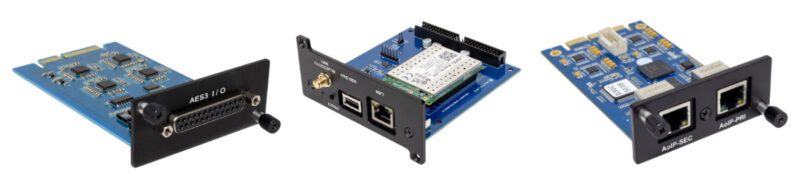
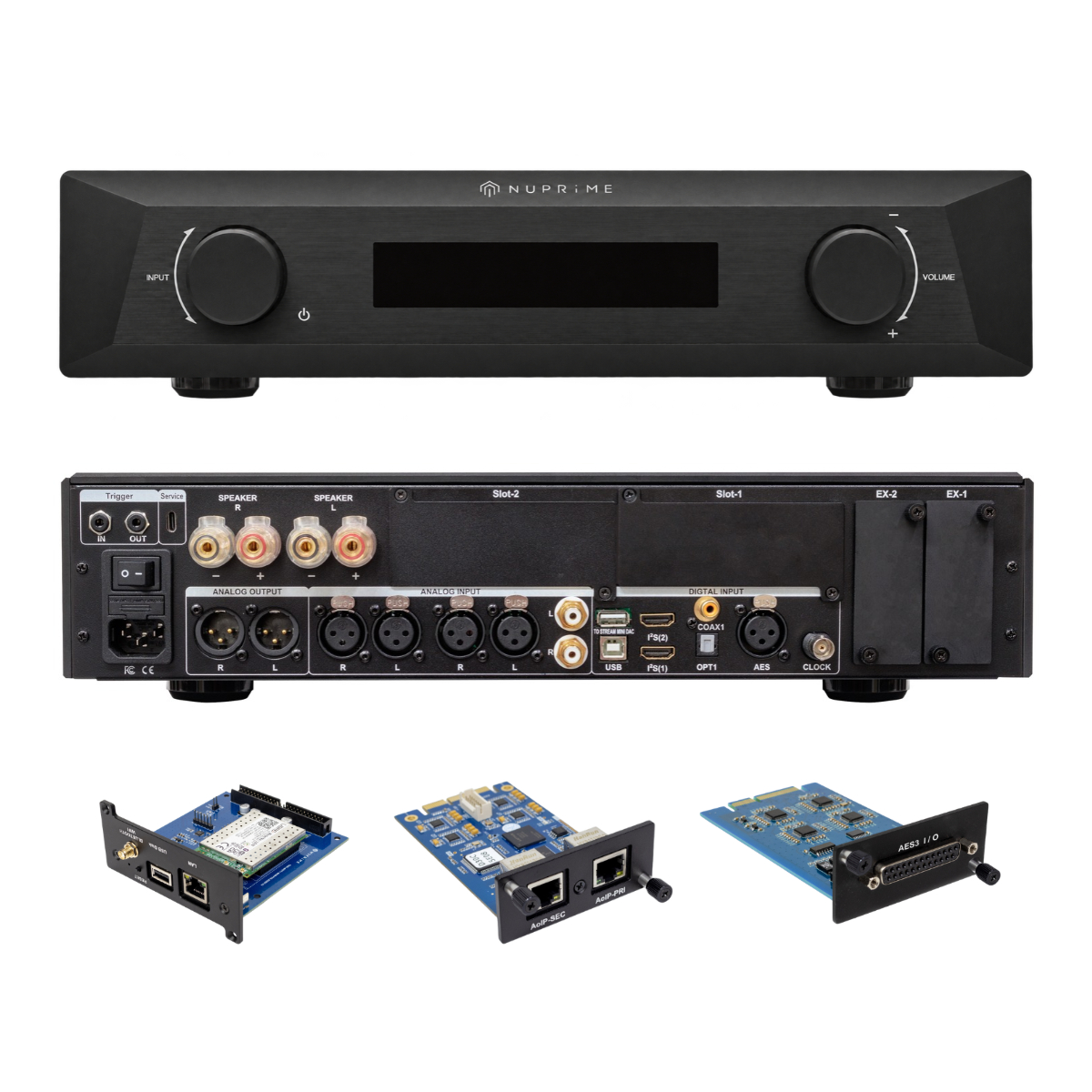
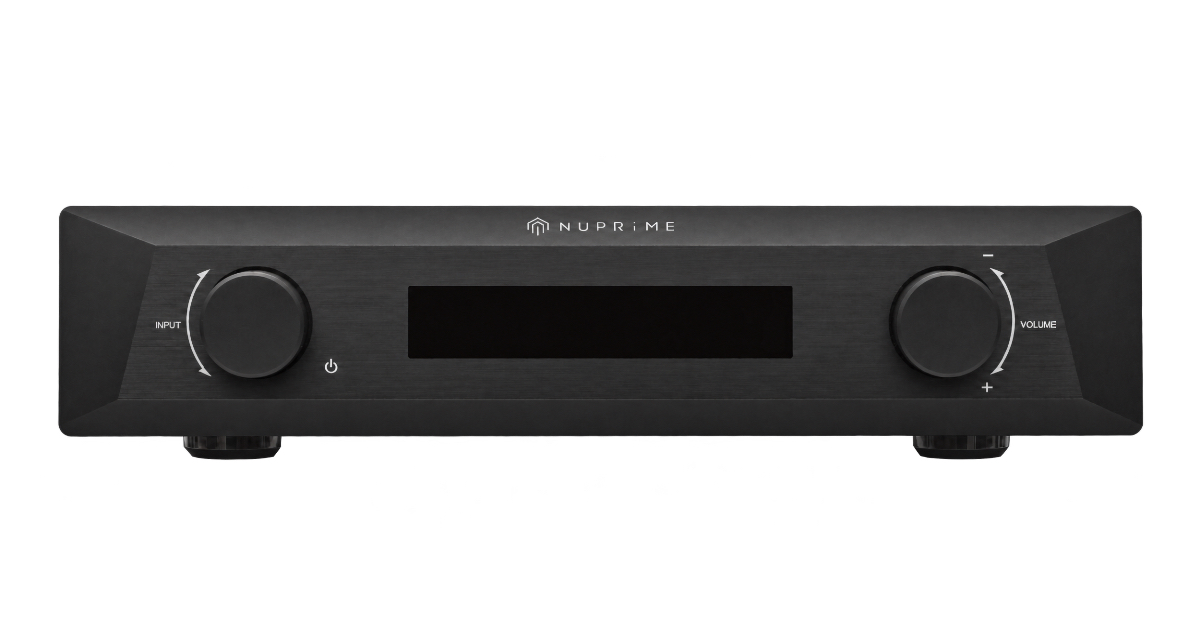
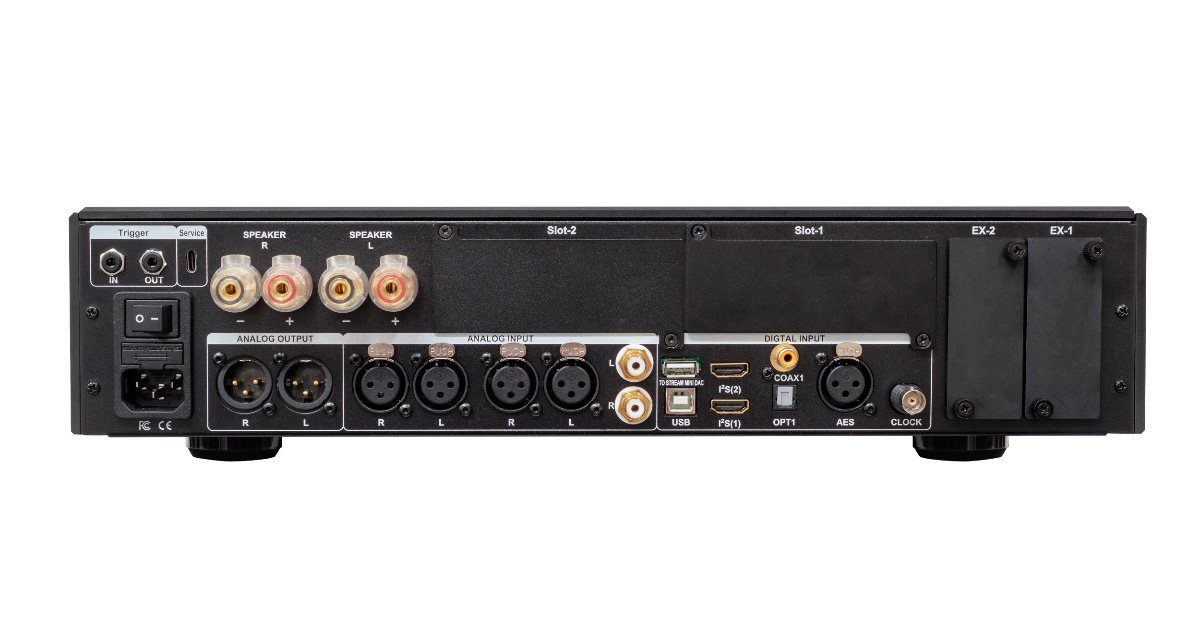
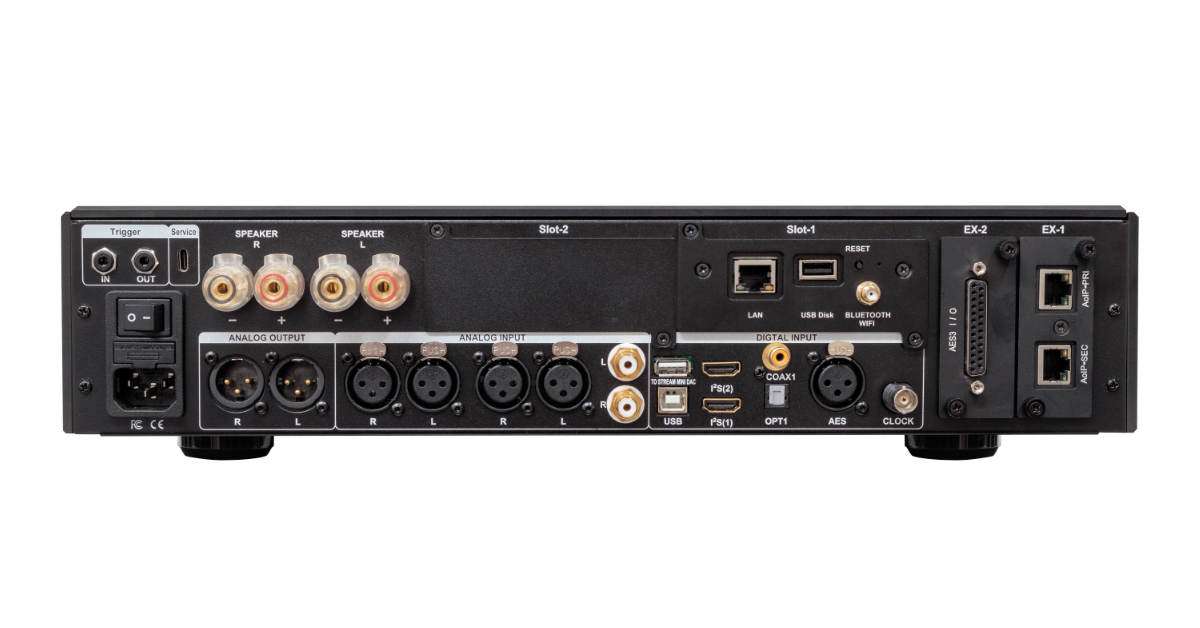
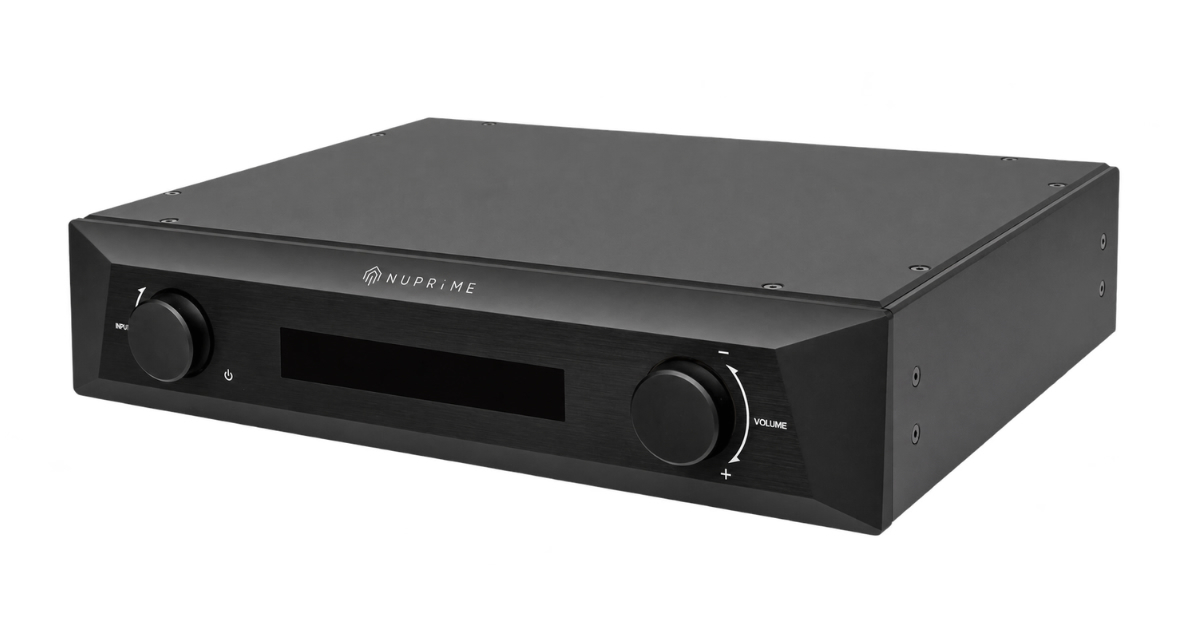
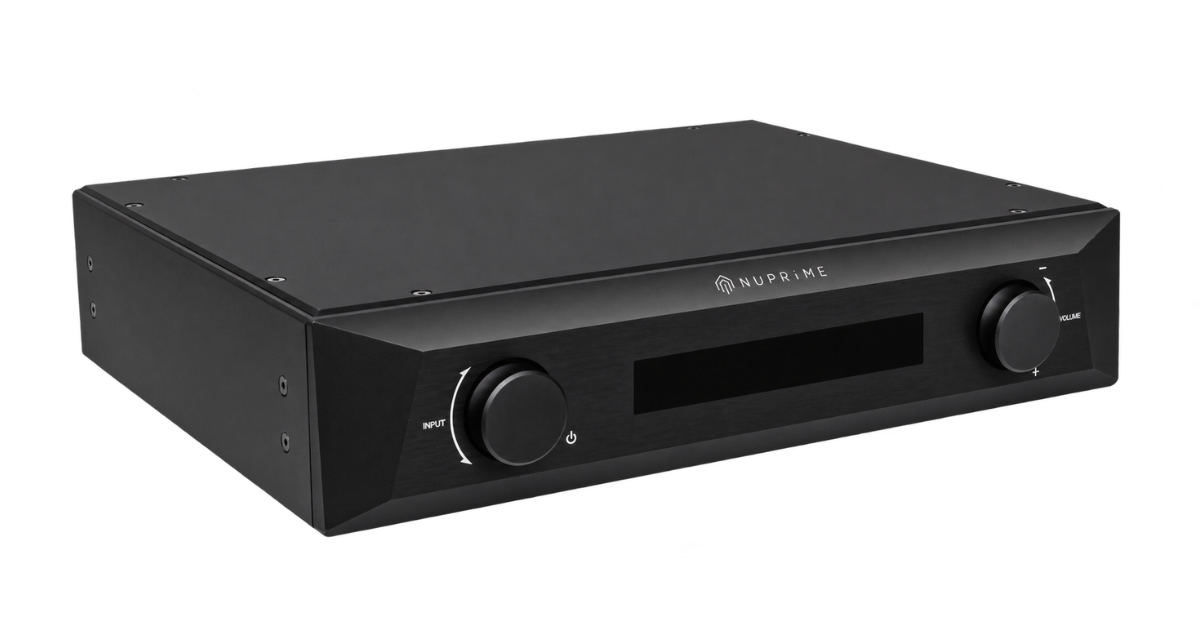
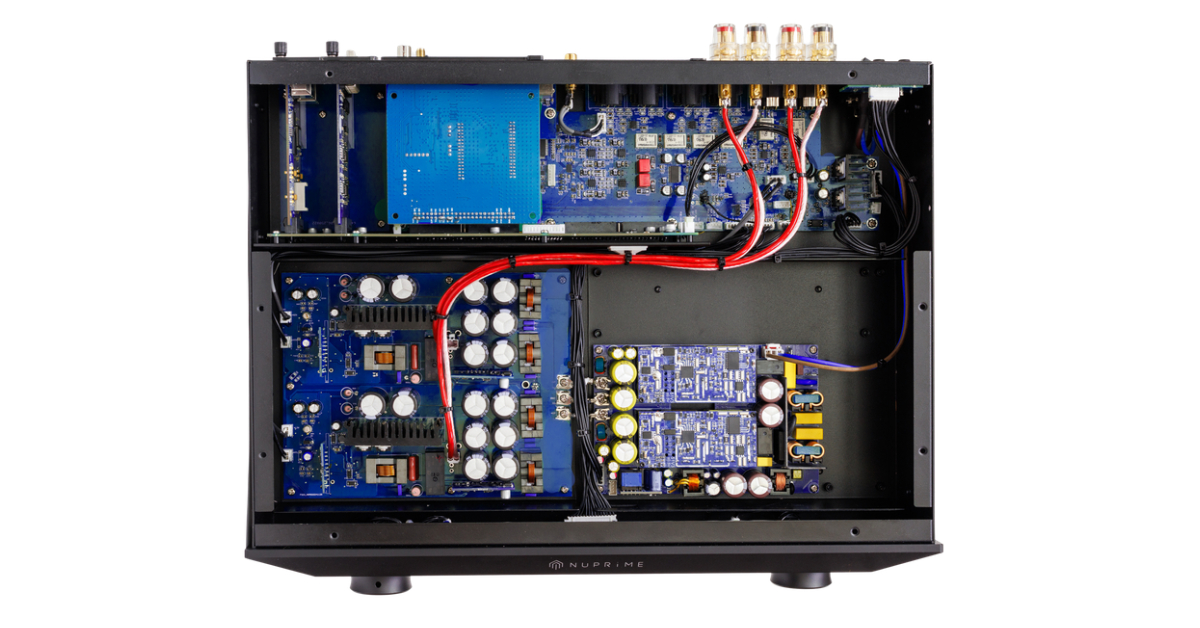
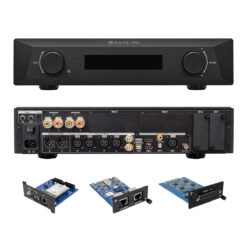

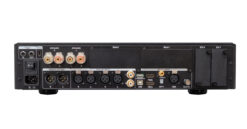
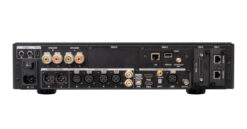
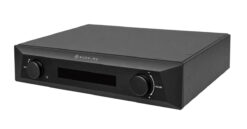
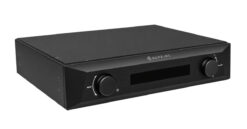
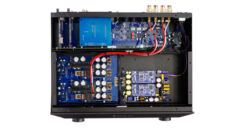
We designed the IDA Fusion-10 for stereo systems that call for precise imaging and the headroom to handle demanding musical passages. It combines a single-ended Class A input stage, a dual-feedback Class D output stage that switches at approximately 900 kHz, and a compact gallium nitride (GaN) power supply. The amplifier is rated at 300 W per channel of music power.
Hybrid Class D Amplifier
Wideband Class A Input
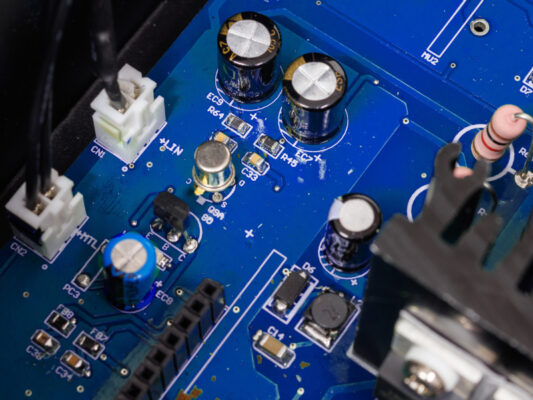
We use a low-noise, communications-grade junction field-effect transistor (JFET) for wide input bandwidth and a 1 MΩ input impedance. The single-ended Class A stage operates without negative feedback and feeds our dual-feedback Class D output stage.
High Frequency Switching and Feedback
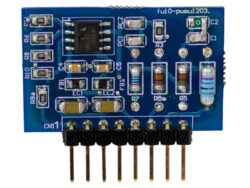
Our Class D stage switches at approximately 900 kHz. The redesigned circuit reduced MOSFET operating temperature by 30% in our comparison. We designed it for lower losses, stable operation, and clear high-frequency detail.
Stereo Imaging
Precision resistors with a temperature coefficient of 15 ppm/°C help stabilize the feedback network as the amplifier warms up. We tuned the second feedback loop to give voices and instruments a more defined position within the soundstage.
Current Delivery and Audio Capacitors
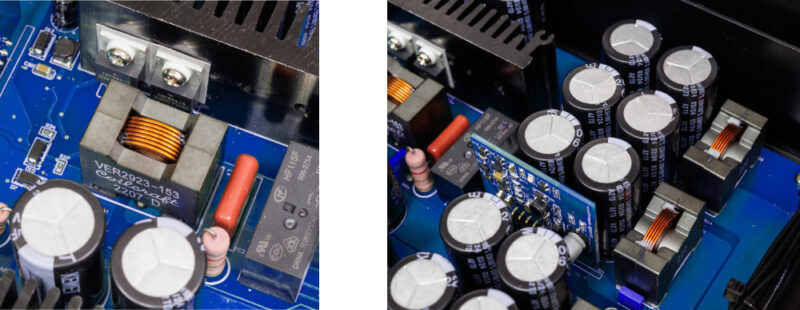
A 20A inductor, 35,200 µF of reservoir capacitance, and low-impedance copper-foil paths help deliver short bursts of current during musical peaks. We use Nichicon MUSE KZ capacitors for input coupling and parallel EPCOS and KEMET capacitors in the power supply bypass networks. We chose these components for tight bass, clear treble, and a full tonal balance.
DAC and Preamp Design
The IDA Fusion-10 puts the post-DAC analog stage and preamplifier at the center of its design. The ESS ES9038Q2M SABRE32 handles high-resolution digital-to-analog conversion, and the circuitry that follows is voiced for fine detail, tonal warmth, and natural-sounding vocals. A precision MUSES72320 resistor ladder adjusts volume in the analog domain, while a dedicated line-output stage drives a power amplifier or powered speakers directly.
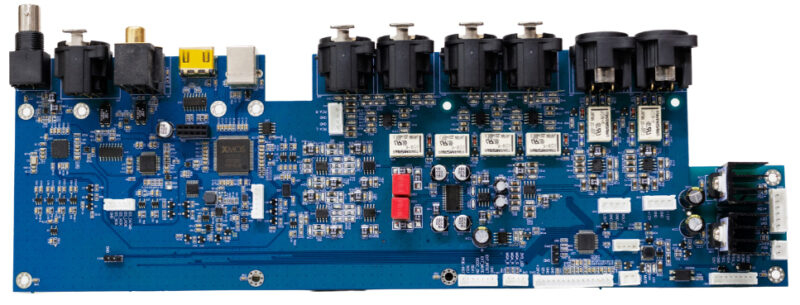
Post-DAC analog stage
The circuitry following the DAC uses two Texas Instruments audio op amps, the OPA134 and the LM4562. The JFET-input OPA134 was selected for the warmth and body it brings to the circuit’s voicing. The LM4562’s low noise and ultra-low distortion support a clean, neutral presentation that lets subtle recording details come through.
Precision analog volume control
Volume is adjusted after digital-to-analog conversion by Nisshinbo Micro Devices’ MUSES72320. Electronic control selects the attenuation setting on a precision resistor ladder, while the audio signal stays in the analog domain. The ladder offers steps as fine as 0.25 dB and is designed for close left and right channel tracking, helping keep the stereo image centered at quiet listening levels, where conventional potentiometers can exhibit channel imbalance. Applying attenuation in the analog stage also lets the DAC operate at its normal digital signal level when you turn down the volume.
MUSES8820 output stage
Nisshinbo’s MUSES8820, a bipolar-input dual audio op amp, forms the final line-output stage. It was selected to give the IDA Fusion-10 its intended balance of full lower mids, smooth vocals, and clear detail. The output stage drives the line-level inputs of a power amplifier or powered speakers, allowing the IDA-Fusion 10 to serve as both DAC and preamplifier in a stereo system. Nisshinbo MUSES8820
ANC GaN Power Supply Technology
When space is limited, NuPrime’s ANC GaN power supply delivers much higher power density—more power from a smaller supply—with performance equal to the best low-noise linear power supplies.
This is a performance and packaging choice. NuPrime’s ANC GaN PSU actually costs more than a comparable linear PSU.
How does it work?
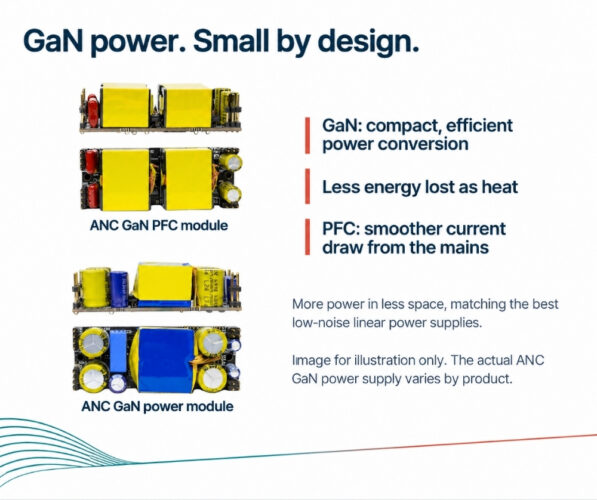
GaN technology enables compact, efficient power conversion.
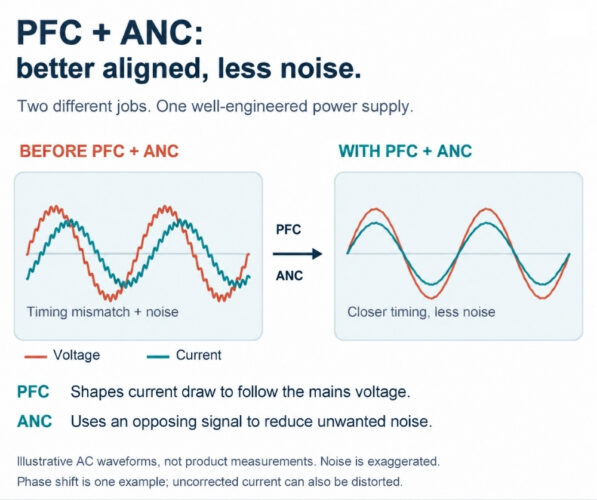
Power Factor Correction (PFC) helps the supply draw current more smoothly from the mains. Power factor is the ratio of real power to apparent power. At a given mains voltage and real power, a higher power factor lets the supply draw less RMS current.
Active power factor correction (PFC) shapes the input current to follow the mains voltage more closely, reducing current harmonics. Active PFC can bring power factor into the 0.95–0.99 range under suitable operating conditions.
Active Noise Cancellation (ANC) senses unwanted power supply noise and applies an opposing correction signal to reduce it—similar in principle to noise-cancelling headphones.
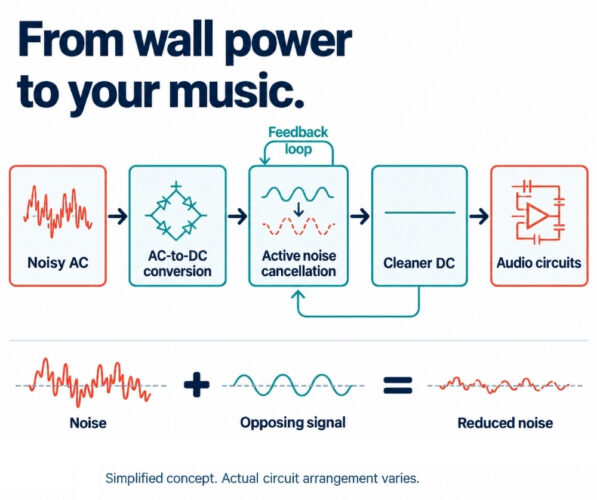
IDA Fusion-10 Implementation
We use a two-stage GaN switching supply to deliver high power from compact modules. The first stage conditions the AC input. The second supplies the amplifier’s positive and negative voltage rails.
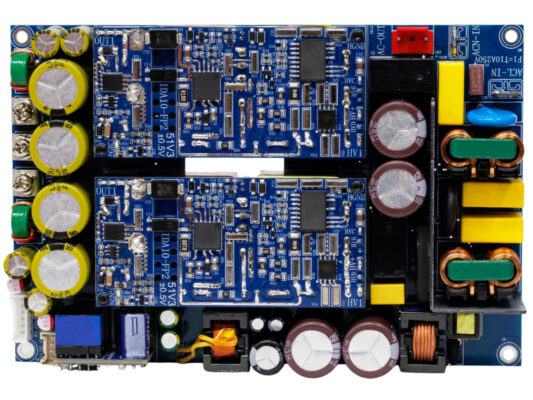
Our 600 W GaN PFC module uses two interleaved switching phases to reduce current ripple and keep the intermediate DC voltage stable. We designed the AC input and power modules to limit external interference and keep supply noise low.
Symmetrical Dual Rail Supply
Two independent 300 W GaN DC-to-DC converters supply the positive and negative rails. Each converter can deliver up to 15 A of instantaneous current. The combined 600 W supply has a stated instantaneous current capability of 20 A.
Compact Power Delivery
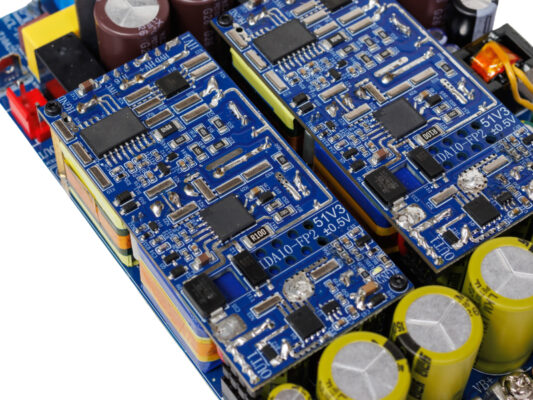
Our supply takes up roughly one-quarter the volume and weighs about one-fifth as much as a conventional transformer. It supports 300 W per channel of music power. We designed the supply to respond quickly to transients while preserving low-level detail and separation between instruments.